Home · Gemstones
Journal · Buying gemstones
Buying gemstones without guesswork
265 items in stock, more than 40 stone types, from round beads to cabochons. Everything listed here is on the shelf – with stone type, cut, size and drill hole.
265
Items in stock
40+
Stone types
118
Cabochons
10 %
For trade customers
This page explains what is sold in the shop under the name gemstone, by which criteria we buy, and how you choose the right one from 265 items. It does not replace a gemstone grading – that is what laboratories are for. It answers the questions that actually come up before a purchase.
What a gemstone means for this shop
Gemstones are minerals or mineral rocks that are cut or processed into beads. For jewellery making, four details matter more than any trade name: the mineral type, the cut, the dimensions and the drill hole. These exact four details appear in every product text of ours.
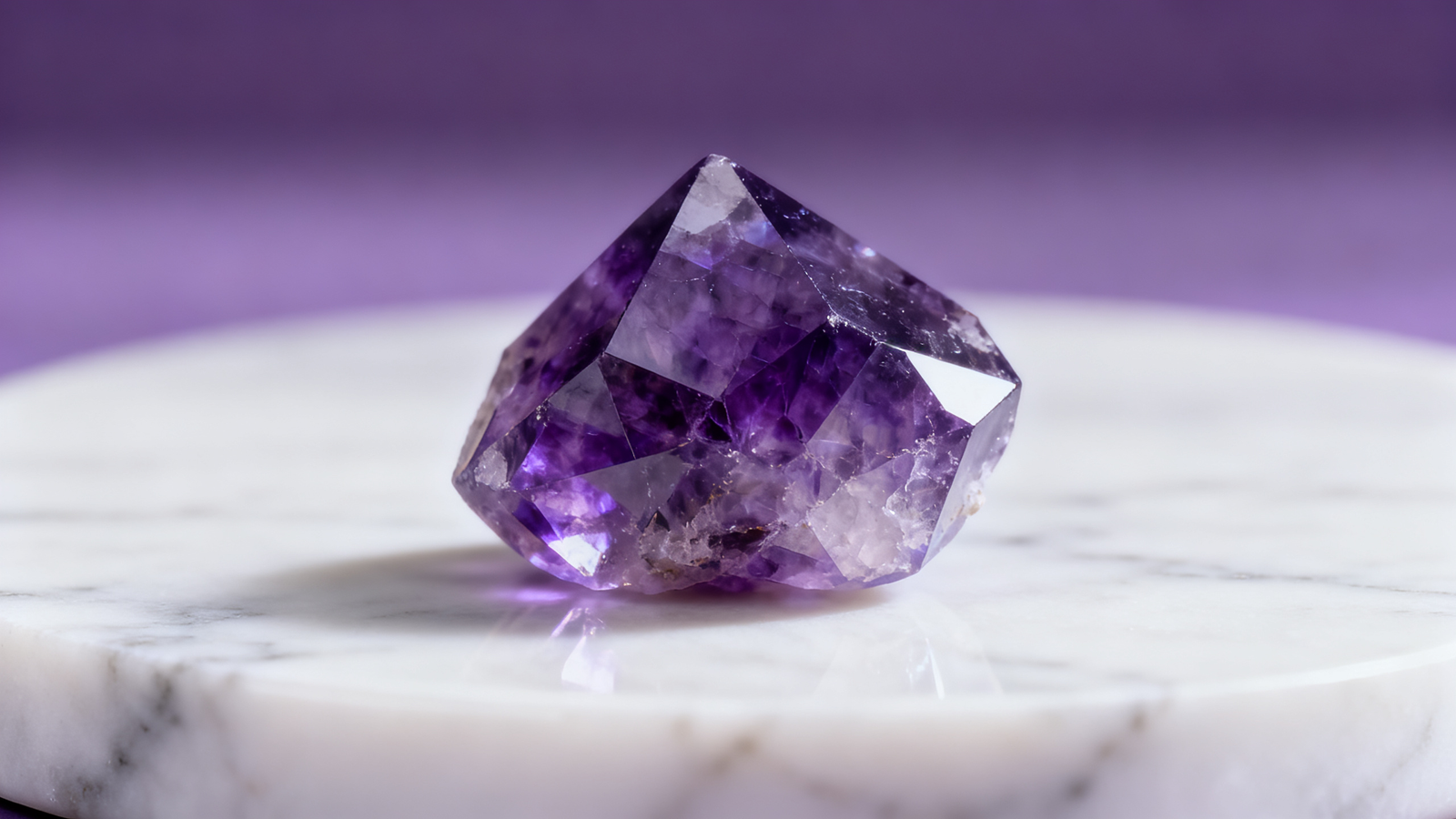
Most of the range consists of quartz varieties – amethyst is purple quartz, citrine yellow, rose quartz pink, rock crystal colourless. Added to this are feldspars such as labradorite and moonstone, garnets, tourmalines and opaque rocks such as jasper, agate and onyx.
Range: 265 items in over 40 stone types
Six stone types make up most of the stock. The number next to the name is the number of items currently in that category:
We also carry smoky quartz, onyx, turquoise, moonstone, labradorite, garnet, tiger’s eye, agate, jasper, sunstone, amazonite and other varieties. The complete list is under Stone types.
Shapes and cuts
The second way through the range is by shape. Cabochon is the largest group with 118 items: flat, domed stones without a drill hole that are glued or claw-set into a mount. Round beads are drilled and intended for necklaces and bracelets; oval and drop follow the grain of the rough and therefore look less uniform. Heart and faceted versions complete the programme, rough stone and loose material are unworked pieces for further processing.
What to look out for when buying
Natural origin and treatment
A large part of the goods in the gemstone trade is treated: citrine is often heat-treated from amethyst, turquoise is dyed, some quartzes are irradiated. Treatment is not a defect as long as it is stated – a dyed stone is no less beautiful, but it has to be valued differently from an untreated one. If treatment matters to you, ask about the specific item before buying; we then answer about the specific batch and not in general terms.
Quality grades
From A grade for getting started to AAA for collector’s pieces. The grade describes above all clarity, colour saturation and evenness – not size. A small stone in AAA can cost more than a large one in A.
Dimensions instead of guesswork
When searching, give millimetres, not adjectives. 4 mm is a fine chain, 8 mm is the usual bracelet bead, 20 mm is a statement. With cabochons the thickness also decides whether the stone fits an existing mount.
Colour on screen
A photo shows one particular stone from one particular angle. With natural stone, shade and pattern vary from piece to piece, and with several strands of the same variety the batch may differ slightly. That is exactly what distinguishes natural goods from glass.
Your benefits at Moss Crystal
- In stock: everything in the shop is on our shelves and is not reordered first.
- One price for everyone: no negotiated tiers in the shop; trade customers get 10% with no minimum order value.
- Shipping: free within Germany from 60 €, within the EU from 79 €, to Switzerland and non-EU countries from 120 €. Customs and import VAT are borne by the recipient.
- Payment: PayPal, Visa or Mastercard, bank transfer.
- Returns: 14-day statutory right of withdrawal, plus a voluntary 30-day return policy.
For beginners: the first three strands
Anyone buying gemstone beads for the first time does not need a full range but a basic kit: one strand of 8 mm round beads as a neutral base (rock crystal or smoky quartz), one strand in a colour as an accent (amethyst or rose quartz) and a few cabochons in the mount size that fits the planned project. With that you can build a complete bracelet before committing to a direction.
Many customers search for exactly these items under the term healing stones. We describe material, cut and dimensions only and make no statements about effects – there is no reliable evidence for them, and such advertising for natural stones is not legally permissible in Germany.
Care and cleaning
Water and mild soap do not harm most quartzes. Porous stones such as turquoise, malachite and lapis lazuli are sensitive: they dislike long water baths and aggressive cleaners, and perfume or hairspray leave marks on them. Amethyst and fluorite lose colour over the years under permanently strong sunlight.
For most items a soft, slightly damp cloth is enough, then wipe dry. Clean silver parts at the clasp separately so that no cleaning agents reach the stone. We make no statements about energetic or spiritual uses.
Frequently asked questions
Are the gemstones natural?
Yes. We buy exclusively from suppliers whose goods we have checked, mainly from Brazil, Madagascar, Pakistan and Afghanistan. We do not offer laboratory-certified individual grading – for goods at a few euros per strand the effort is out of all proportion. If you need a certificate for an item, ask before buying; we will then clarify effort and cost.
Is dyeing, heating or irradiation labelled?
Where we know an item has been treated, it says so in the product text. With inexpensive varieties, treatment is common without always being traceable back to the individual strand. If in doubt, ask about the specific item rather than relying on a general assurance.
Do you ship abroad as well?
Yes. Free within Germany from 60 €, within the EU from 79 €, to Switzerland and non-EU countries from 120 €. Customs and import VAT are borne by the recipient.
Can I buy as a business?
Yes, with a 10% reseller discount and no minimum order value. You send your trade licence once before your first order by email to service@mosscrystal.com; after that the discount is applied automatically to every order. Details are under Wholesale.
Why does the same stone cost different amounts?
Price differences within one stone type come from size, clarity and evenness of colour. A strand of 10 mm beads in a consistently even shade can be sorted from far less rough than a 6 mm strand and therefore costs more. The quality grade in the product text states which class the item falls into.
Next step
Stone in mind but the size unclear?
Write to us with stone type, shape and planned size – we reply with the items in stock for it, and with a concrete answer instead of a brochure.